How to answer the common interview question – why have you chosen a career in media and digital? Learn how to give a great answer plus discover tips on how to make your job application and interview a real success.
One of the top interview questions you may be asked whether entering the media and digital sector or progressing your career is why have you chosen this sector? Why media and digital? What is that motivated you to jump in?
It’s a question that you will not be able to escape from, and it will be asked at some point – especially considering the different fields covered by this sector.
Having an answer ready is one part of the application process, and you need to be able to answer it convincingly and with thought. The recruiter will want to gauge your suitability for the position, and this is a good place to start.
There are lots of opportunities available with a career in Media and Digital
Opting for a career in Media and Digital in the UK opens a range of opportunities, especially considering the exciting and different career paths available.
Whatever part of Media and Digital appeals to you, there are opportunities to develop your skills and progress your career.
If you are thinking of a career in this area, the following sections will help you understand and appreciate just why a career in Media and Digital in the UK can be a very rewarding one.
What are the responsibilities associated with a professional in Media and Digital?
Because of the varied roles within Media and Digital, the responsibilities are also varied and can be specific to the role. That said, here are some key responsibilities that can be expected:
- Establishing the organisation’s web presence to boost or promote brand awareness.
- Communicating advertising targets or goals, schedules and deadlines to team members.
- Maintaining a strong and effective online company ‘voice’ through social media.
- Staying abreast or up-to-date with digital media trends and developments.
- Liaising and working with marketing, sales and product development teams to ensure brand consistency.
- Effectively overseeing, monitoring, and analysing the performance of several digital channels.
- Ensuring that communications are developed across digital channels, including ensuring the business website is up-to-date, relevant and on-brand.
- Providing advice to internal teams on the most effective and efficient way to publish their digital content
Why choose a career in Media and Digital?
There’s no doubt that you will be asked this question at some stage during your application, so it is definitely worth preparing for.
Some variations on this question could include:
- What attracts you to the Media and Digital industry?
- Can you share your reasons for choosing Media and Digital as your career path?
- Why do you think a career in Media and Digital would be a good fit for you?
Remember that these questions are basically asking the same thing and all they want is to gauge your enthusiasm and motivation. To help you navigate this question, here are some reasons why you might want a career in Media and Digital:
Diverse opportunities: The field of Media and Digital is a large one and it offers varied roles and career paths. You could work in various roles such as a sound engineer, photographer, digital media specialist or digital media professional.
Creativity and technical expression: Media and Digital fields offer a blend of creativity and technical opportunities, appealing to people who are keen on shaping the way we consume and engage with information in the digital age.
Dynamic and ever-evolving: Media and Digital is a dynamic field. The constant changes and advancements in technology provide exciting opportunities for career and personal growth and learning.
Highly paid jobs: Some roles in the media and digital sector are highly paid, making it an attractive career choice.
Work flexibility: Careers in digital marketing, for example, often offer work flexibility and the opportunity to work remotely.
Enhances exposure: Working in this field can enhance your exposure as you’ll likely work with a diverse range of company clients and projects.
The best career choice to make is the one that aligns with your interests, skills, and long-term goals. If you’re passionate about media and digital technologies, this could be a great field for you to start a career in!
See how to get expert answers to any interview question here.
What skills and abilities are required for a career in Media and Digital?
There are a range of skills and abilities required for a successful career in the field of Media and Digital. These include:
- The ability to develop Creative Content
- Technical proficiency
- Analytical skills
- Communication skills
- Being able to work effectively within a teamwork
- Creativity and innovation
- Management skills
- Problem-solving abilities
- Ability to prioritise
- IT Skills
In addition to these, familiarity with specific software tools such as Photoshop, Illustrator, InDesign, Premiere Pro, After Effects, Final Cut Pro, Google Analytics, WordPress, SEO/SEM, Hootsuite, Mailchimp, HTML/CSS can put you at an advantage. Again, this depends on your actual role.
Who is suited to a career in Media and Digital?
A career in Media and Digital is suited for those who have a passion for creativity, technology and communication. Here are some characteristics of people who may be well-suited to a career in this area:
Interest in technology and digital media: People who are interested in the digital world, enjoy working with technology and are eager to stay updated with the latest trends and advancements are often drawn to this field.
Creative: This field requires a lot of creativity. Whether it’s designing a website, or creating a marketing campaign, creativity is key.
Strong communication skills: As most of the work involves conveying information effectively, strong written and verbal communication skills are crucial.
Analytical mindset: The ability to analyze data, understand audience behaviour, and make data-driven decisions is important in this field.
Ability to Adapt: Digital media is constantly changing. Therefore, individuals who are adaptable and can quickly learn and apply new skills are likely to thrive.
Problem-solving skills: Whether it’s troubleshooting a technical issue or figuring out how to increase engagement on a social media post, problem-solving skills are valuable in this industry.
Be a team player: Lots of roles in this field require collaboration with others, such as graphic designers, content writers and marketing specialists. So, being able to work well in a team is important.
Have a passion for learning: The digital media field is constantly evolving, making it necessary for professionals to commit to ongoing education and learning.
Having a creative flair is no doubt important for a career in this field, but if the above sounds like you as well then you have a good chance of a successful career.
What qualifications are needed to apply for a career in Media and Digital?
The qualifications required for a career in Media and Digital can vary depending on the specific role. That said, here are some general qualifications that are often required or can be beneficial:
Educational qualifications
A good foundation is strong A-level grades (or equivalent) in relevant subjects. Higher education qualifications such as a degree in digital media, communications, journalism, or a related field can provide you with the foundational knowledge necessary for this career.
Courses in graphic design, video production, social media and web development can also be useful.
Specialised degree courses
Once you have identified where you want to work in Media and Digital, keep an eye out for specialised degree courses to choose from.
Postgraduate qualifications
You can choose a postgraduate degree after studying any degree course. Postgraduate media qualifications are acceptable and they give you the freedom to study a different undergraduate degree while still working towards your career in media.
Relevant experience
Gaining relevant experience via apprenticeships, work placements, or volunteering can also be helpful for you. This can provide practical skills and make your CV more attractive to potential employers.
Software and services certifications
Certifications in specific tools such as Photoshop, Illustrator, InDesign, Premiere Pro, After Effects, Final Cut Pro, Google Analytics, WordPress, SEO/SEM, Hootsuite, Mailchimp and HTML/CSS can put you ahead of the competition.
Remember, there is not a one-stop solution to a traditional route into a Media Digital career.
It’s important to research the kind of career you’re looking for in this sector, as there’s significant variance in qualifications.
How do I apply for a career in Media and Digital?
There are several steps in starting a career in Media and Digital.
Learn how to create a brilliant cover letter for your application.
Media
Depending on the role you’re interested in, the qualifications may vary so research the position you want to apply for and the specific job being advertised.
For instance, a broadcast engineer might need science-related qualifications, while a journalist will likely benefit from English A-Levels and higher education qualifications such as a degree in journalism.
Look at opportunities for higher education opportunities. When you’ve worked out just where you want to work in media, look out for specialised degree courses. For instance, if you want to work in digital art then look for a relevant degree where that would be applicable.
Digital Media
Learn the basics of digital media. A background in digital skills, like coding, multimedia design and programming, can give you a distinct advantage.
Work toward becoming a social media expert. Digital and social media are synonymous today, and using them to understand audience behaviour and develop relevant hard and soft skills is crucial.
Create an online, relevant and easily accessible portfolio. Establish an online presence by building your portfolio, which can be in the form of a website or blog.
Get an apprenticeship position. A great way to grow your experience and skills in digital media is to look for apprenticeship opportunities.
Preparing your application
When you have found the role you wish to apply for, and you have done your research around it, it is time to start preparing your application.
Set aside some time for this, when you know you won’t be disturbed, and get comfortable. You will need to work on your cover letter and your CV and of course, prepare for your interview.
When you are finished preparing your application, proofread everything. Only when you are happy with the way it all looks and sounds do you hit ‘Submit’.
The application process
The application process for a career in Media and Digital is fairly straightforward and typically involves the following:
- Research the industry and the role you are interested in. This includes understanding the responsibilities and what will be expected of you, the required skills and the daily activities of the role.
- Make sure your education meets the required level and embark on skills development. This could be through a degree program, online courses or self-study.
- Create yourself an online portfolio that showcases your skills and projects. This could be in the form of a personal website or a blog.
- Connect with professionals in the field. This could be through social media platforms, professional networking sites or industry events.
- Apply for an apprenticeship to gain practical experience. This can provide valuable industry insights and can potentially lead to a full-time job.
Finally, apply for jobs in your chosen field. This could involve filling out online application forms, uploading a CV and/or answering application questions.
A career in Media and Digital can be rewarding for someone with creative flair, and there is a lot of potential for career progression.
Get Your Target Job in Media and Digital With InterviewGold
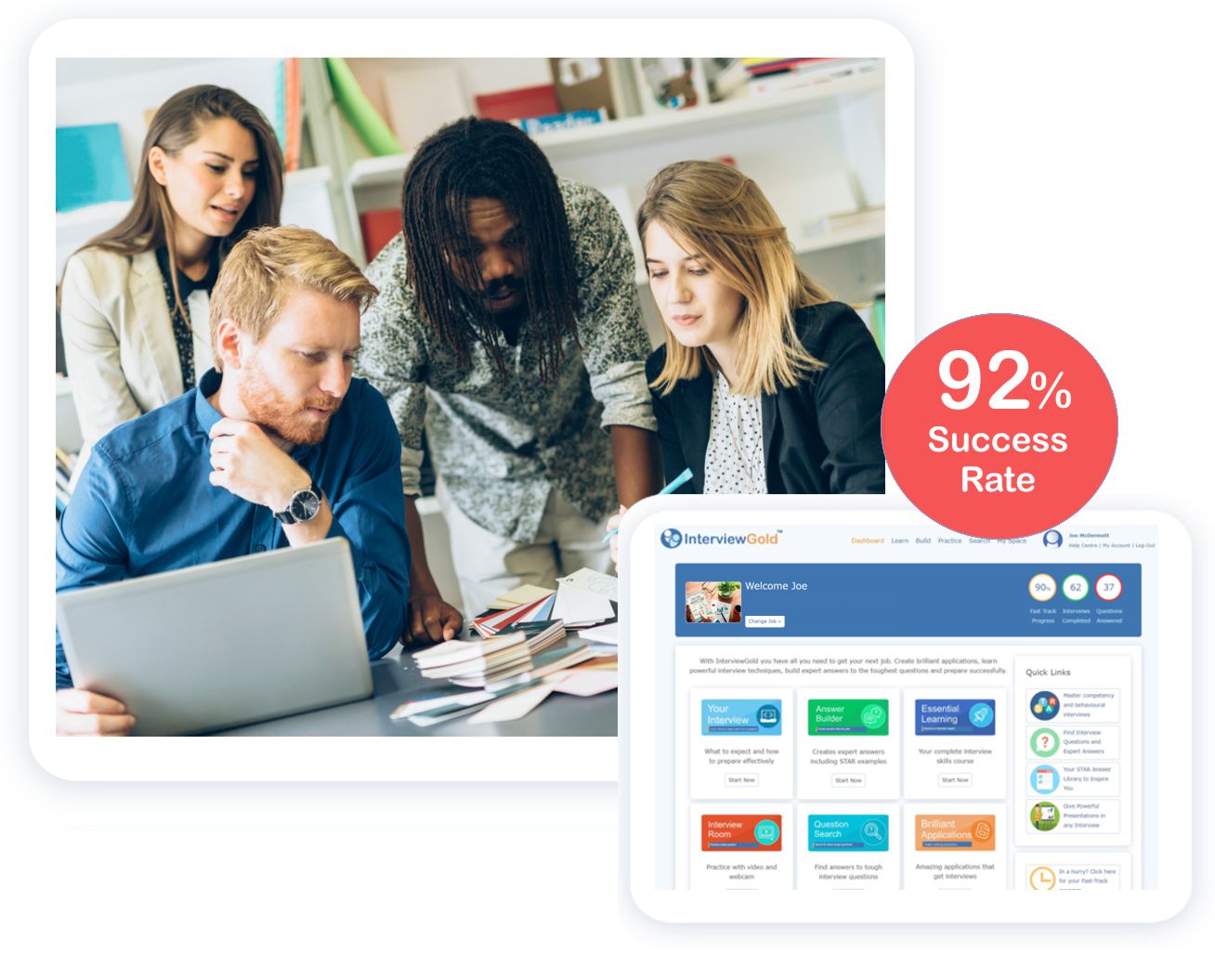
Join InterviewGold and answer marketing interview question including tough competency and behavioural questions with 100% confidence.
With our online interview training program you will learn how to answer the trickiest questions with ease. Plus you will get detailed sample answers all proven to boost your chances of winning the job.
Best of all, it is tailored to your target career. Log in select your role and get accurate questions and answers plus tons of top advice.